
GLUE SCHOOL ✦ THE LEARN SERIES
The 4 glues I reach for most often
If I see a new glue, I can’t help it. I want it. So my studio is pretty loaded down with specialty glues that make me quite happy. But despite the impressive lineup, there are four I find myself reaching for most often.
Studio staples4 minute readCheat sheet inside
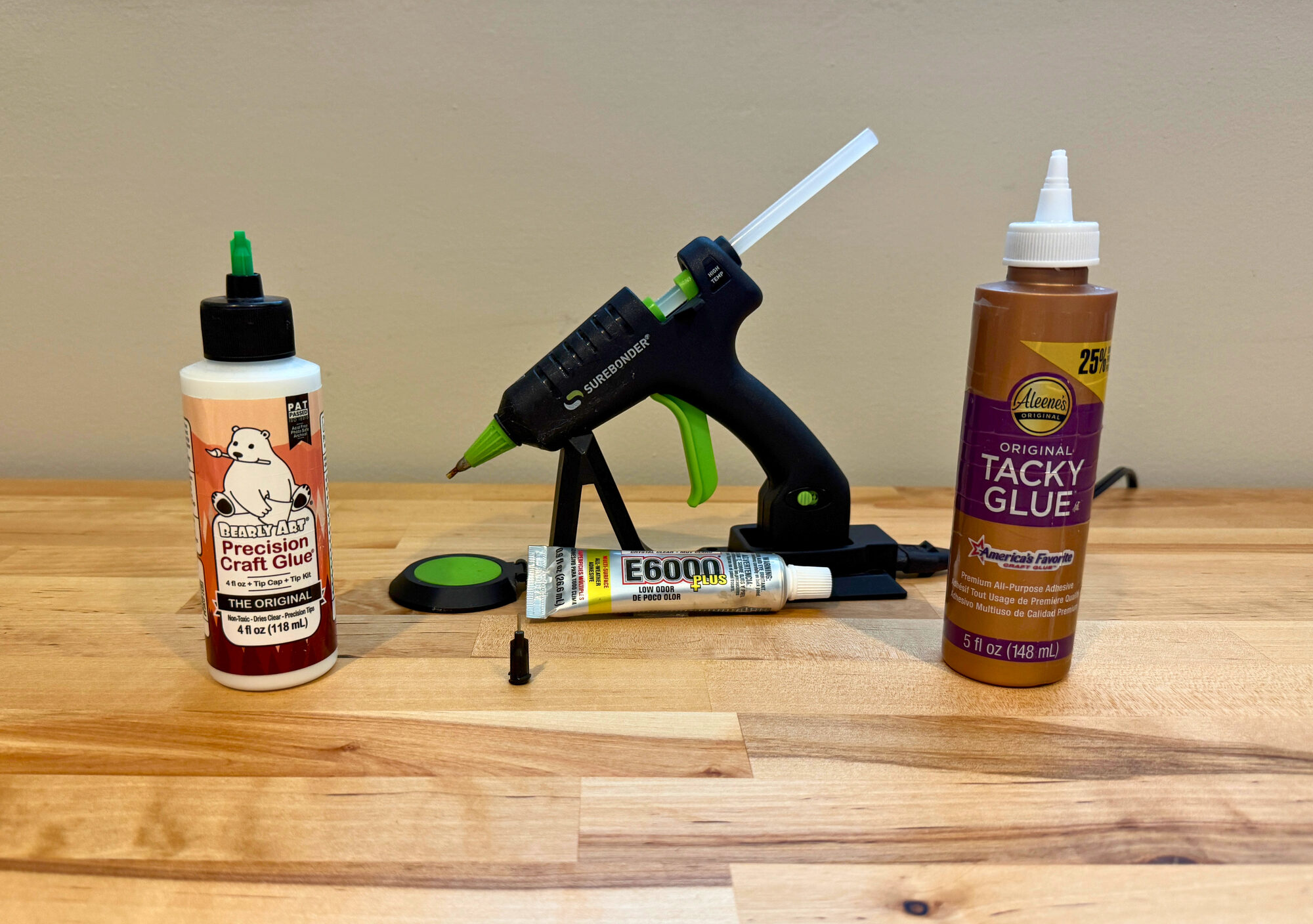
The four that earn their shelf space
1Aleene’s Original Tacky
I love Aleene’s whole lineup, but the original formula is the glue my studio runs on. I use it anytime I need to glue felt, and for most of my paper projects. It stays flexible when it dries, which matters for things like felt ornaments that will flex and bend during their lifetime. It grabs quickly, dries quickly but not so fast that you can’t perfect a placement, and because it is a thicker glue it does not soak through to the front of cardstock the way some glues can.
2Bearly Art Precision Craft Glue
This is a newer find for me and it is AWESOME. I use it largely for papercrafts where I am gluing small, fragile, or thin components. It comes with several tips, and the metal precision tip is incredible. One habit worth keeping: clean the tips with the included pin and a little water before you put them away, so they stay usable.
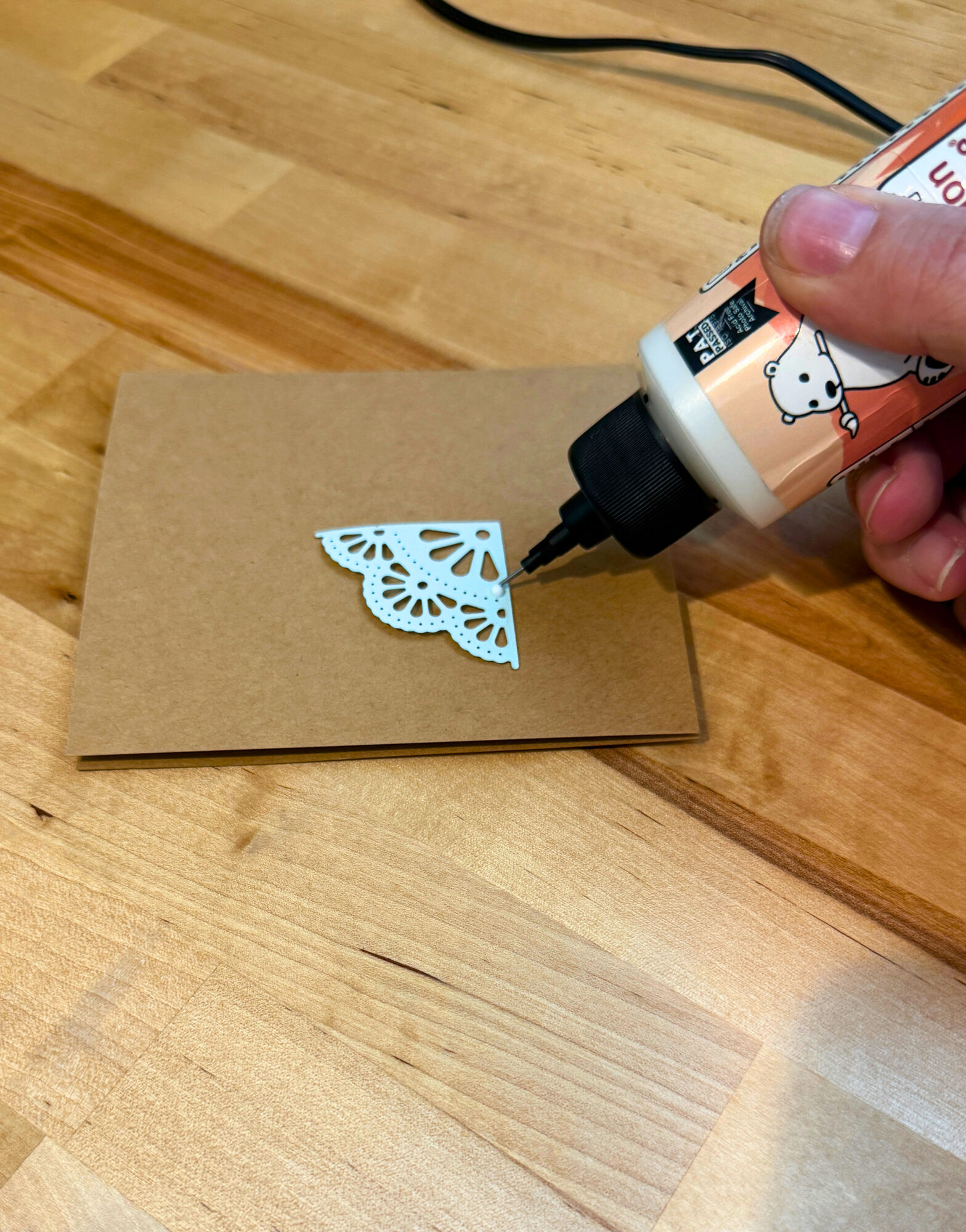
The Bearly Art metal precision tip, putting down a dot exactly where it belongs.
3Mini high-temp hot glue
I know I probably should own a low-temp option too, but honestly I don’t. That bites me in the butt occasionally with foams and plastics that are not heat safe, but I prefer to avoid hot glue where I can. Hot glue is a great product, but, and I say this gently, we overuse it. It is not a good fit for anything that will flex, get handled, or need to be washed. Where I do reach for it: seasonal wreaths, rolled roses, and prototyping, when I want to move fast.
4E6000
E6000 is amazing. It will bond just about anything: glass, ceramics, metal, even fabric. It stays very flexible once cured, so it is great for projects with a lot of movement, and it is waterproof after curing, which makes it perfect for things that get wet. Think bracelets. Two things to plan for: give it a full 24 hours to cure before you trust the bond, and use it in a well-ventilated space, because it smells intense. In my photo I’ve got E6000 plus, which is a low odor version. It’s great when you can find it, and I view it as interchangable with the standard E6000 formula.
The cheat sheet
Want the supply notes first?
What I’m testing, what won, and what to skip, plus new kits and free tutorials. No spam, ever.
Keep learning
More studio-tested supply smarts from the Learn series: